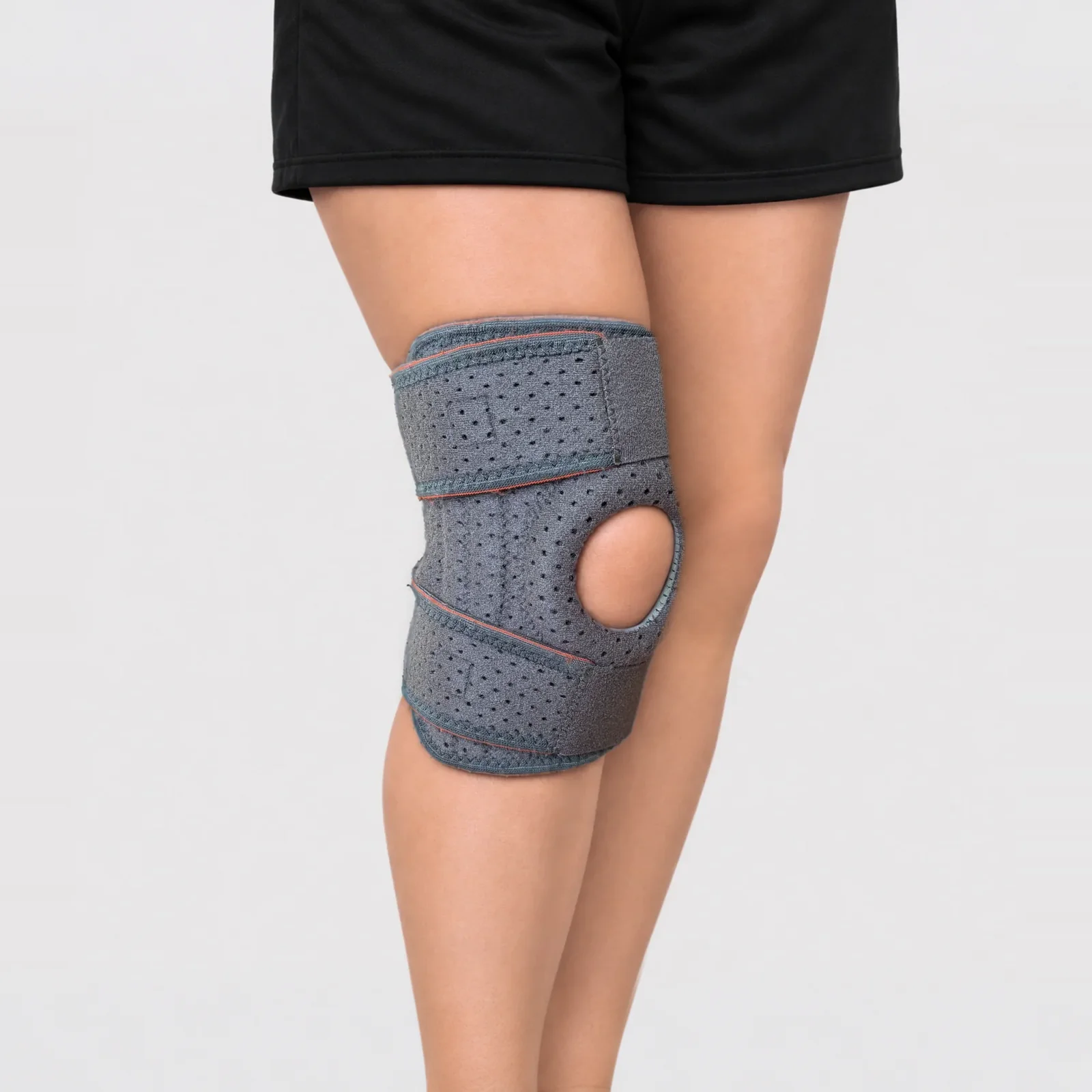
The best knee brace for an ACL injury depends on where you are in your recovery. Prophylactic braces are worn before any injury, mainly in contact sports. Rehabilitative braces hold the knee in a controlled range right after surgery. Functional braces add stability when you return to everyday activity and sport. Most ACL braces work the same basic way: they help limit twisting of the shin bone and inward collapse of the knee, two movements that load the anterior cruciate ligament.
This guide explains each type of ACL brace and what the research says. It also covers how to wear a brace properly and how to choose the right support for your stage.
At a Glance
- An ACL injury is a common and serious knee injury. A torn anterior cruciate ligament can cause pain, swelling and a knee that feels unstable. It usually happens during sport or a sudden movement, and recovery can take many months.
- A knee brace is one part of recovery. A brace for ACL injuries is designed to support the knee joint and help you move with more confidence. It works alongside the plan from your doctor or physical therapist, not instead of it.
- Each brace type has a different job. Prophylactic, rehabilitative and functional braces suit different situations. The right one depends on your injury and how far along you are in recovery.
- Fit decides whether a brace helps. A brace that slips, pinches or overheats ends up unworn. Getting the size and strap tension right matters as much as the type.
What Happens When You Tear Your ACL
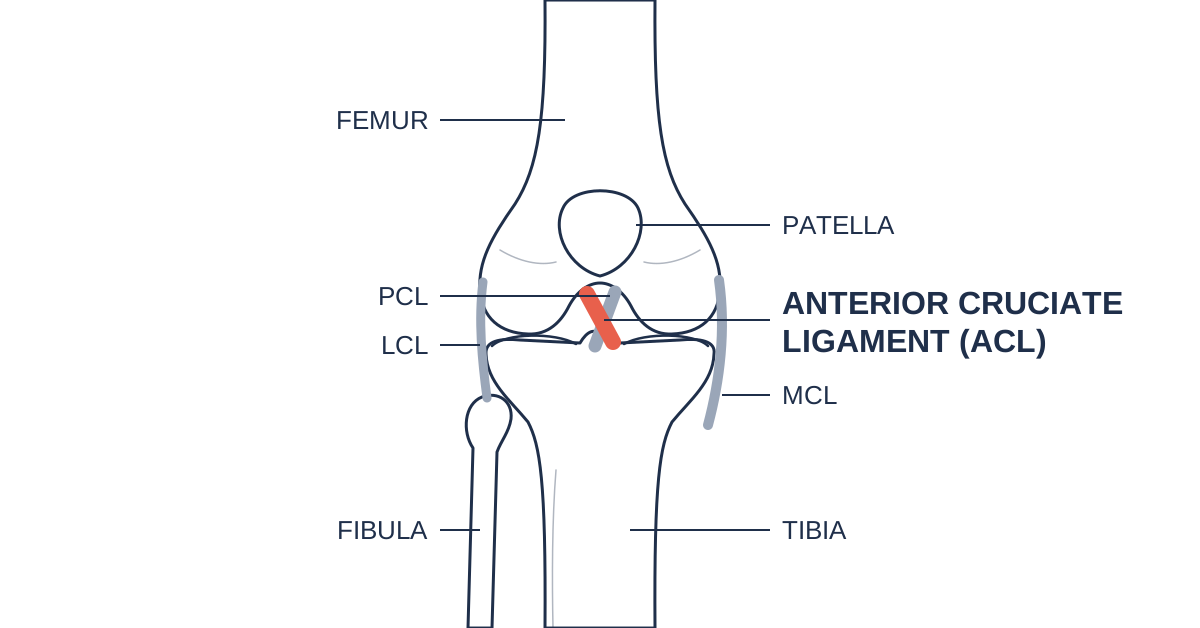
The anterior cruciate ligament connects the thigh bone (femur) to the shin bone (tibia), running diagonally through the middle of the knee. Its main job is to stop the shin bone from sliding forward and to help control rotation.
Many ACL tears are non-contact injuries. In team ball sports, a meta-analysis of 45 studies put the share at about 55%. Nobody hits the knee. Instead, the athlete stops suddenly, pivots sharply or lands awkwardly, and the force on the ligament exceeds what it can withstand. The fibres can then partly tear or rupture completely. This is common in soccer, basketball, football, skiing and other sports with fast changes of direction.
This mechanism explains what a brace needs to do. A brace meant for ACL support is built to help resist twisting and inward collapse of the knee, not just to hold the joint straight.
Typical signs of a torn ACL include:
- a "pop" felt or heard at the moment of injury
- pain followed by swelling, often within a few hours
- a knee that feels like it gives way when you put weight on it
The American Academy of Orthopaedic Surgeons describes an ACL sprain or tear as one of the most common knee injuries, especially in sports such as soccer, football and basketball. If you have any of these symptoms, see a healthcare professional for a proper diagnosis. A brace is support, not a diagnosis or a treatment.
What a Knee Brace Does for an ACL-Injured Knee
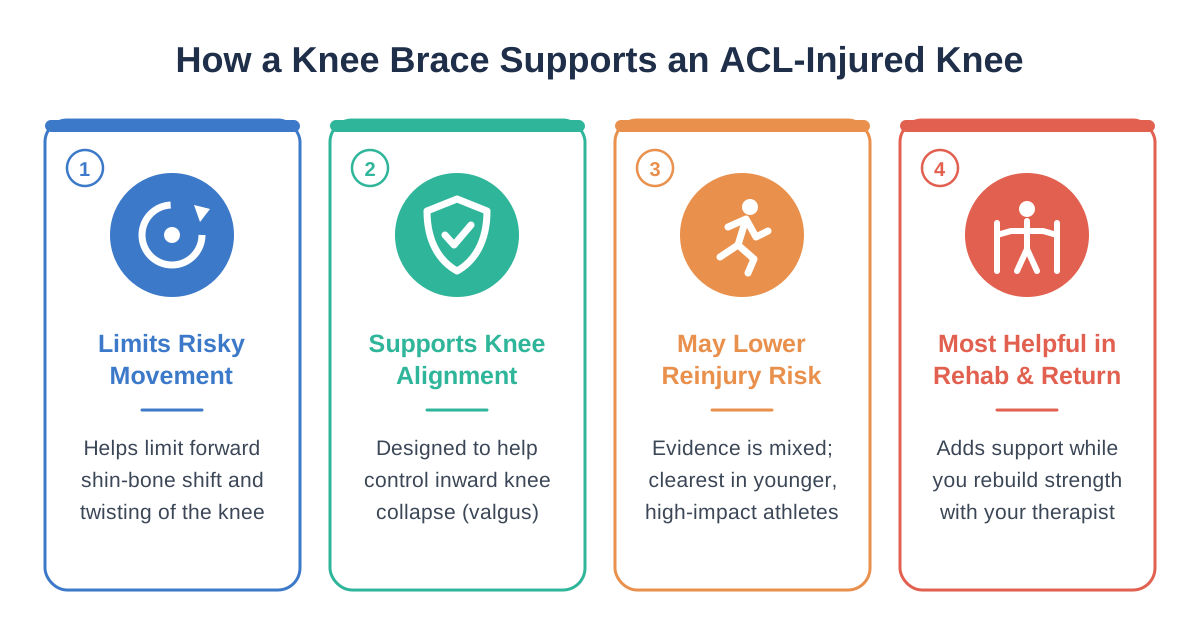
An ACL knee brace is designed to support the knee joint after an injury or surgery. It helps control how the knee moves, eases strain on the area and gives you extra stability as you get back to walking, training or sport. Many people say they simply feel steadier and more confident with one on.
Helps Control Shifting and Twisting
When the ACL is torn or healing, the shin bone can shift forward more than it should, and the knee is more likely to twist or buckle inward. A brace is designed to help limit these movements.
- Functional knee braces are designed to keep the knee steadier when you walk, run or jump.
- Wearing a brace can help you rebuild neuromuscular control, the way your brain and muscles coordinate to protect the joint.
- When you stand and put weight on the leg, a brace can help with balance and posture control.
This kind of support matters most in the first months after ACL reconstruction, when the knee is regaining strength.
Helps Keep the Knee From Caving In
Prophylactic knee braces are worn by some athletes in sports such as football and skiing to help lower injury risk. These braces are designed to:
- help control valgus collapse, where the knee caves inward
- help limit twisting of the shin bone during sudden movements
- support balance and proprioception, your sense of where your knee is
Research on functional braces suggests they can help keep knee movement closer to normal during return to sport. Some studies also found lower ACL loading during high-risk movements, at the cost of slightly less knee bend.
A Possible Edge Against Reinjury
A 2021 systematic review pooled three studies covering 1,196 patients who returned to sport after ACL reconstruction. One study found fewer reinjuries in braced athletes, and another found a protective effect in patients aged 17 or under. Overall, though, the authors concluded that current data cannot show that a brace lowers reinjury rates. Bracing may help some groups, especially younger and very active athletes, but the evidence is not settled. Talk to your surgeon or physical therapist about whether bracing makes sense for you.
Where Bracing Fits Best: Rehab and Return to Sport
Braces tend to be most useful in the months right after an injury or surgery. During that period:
- the healing knee is especially sensitive to strain
- weight-bearing exercises put more load through the joint
- a brace adds external support while you rebuild strength
In sports medicine, bracing is usually combined with physical therapy rather than used alone. Long-term evidence is mixed, but many athletes and patients value the short-term support and confidence a brace gives them.
Prophylactic, Rehabilitative or Functional: Which ACL Brace Is Which?
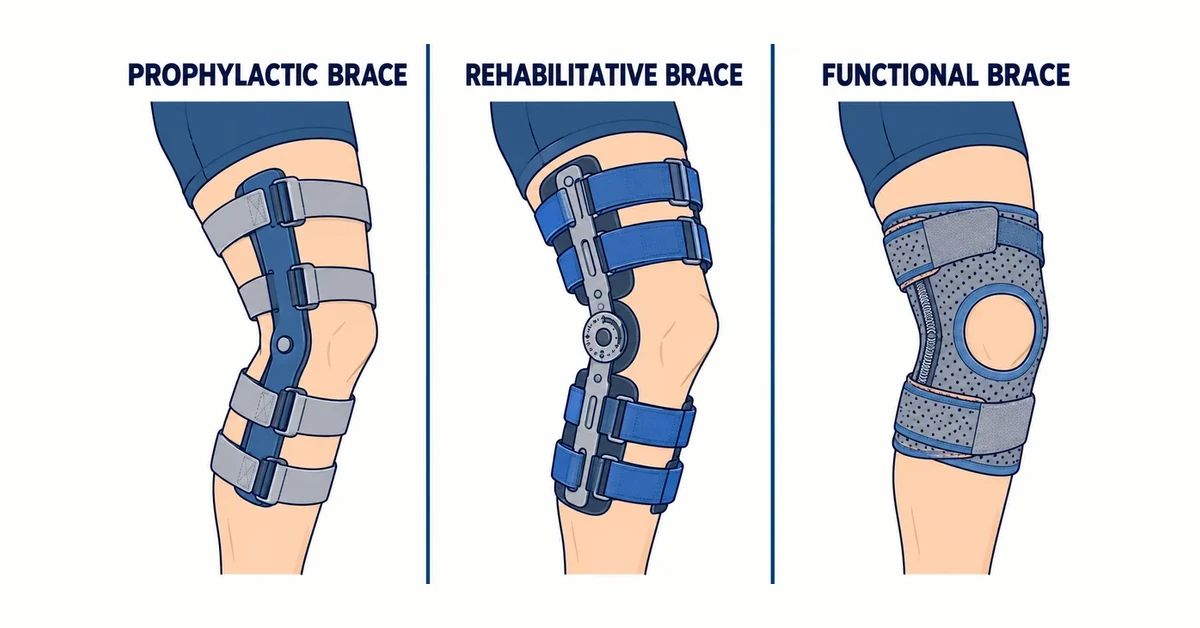
ACL knee braces are not all the same. Each type is designed for a particular stage of recovery or for protecting the knee during high-risk activity. Here they are in the order most people meet them: before an injury, right after surgery, and on the way back to full activity.
Prophylactic Braces: Worn Before Any Injury
Prophylactic braces are worn by athletes with no current injury, mainly in contact sports such as football and rugby. They usually have a rigid bar on the outside of the knee. The bar is designed to absorb and spread out force from a side impact, such as a tackle.
How they are designed to work:
- help limit sideways movement and twisting
- add a protective layer during collisions and awkward landings
- help reduce valgus stress on the knee
The evidence that prophylactic braces prevent injury is mixed. Even so, many athletes say they feel more secure wearing one, especially players with a history of knee problems or those in high-contact positions.
Rehabilitative Braces: Hinged Protection Right After Surgery
Rehabilitative braces are usually worn right after surgery or a serious injury. Their main job is to restrict motion so the knee can heal safely. They are bulky, with adjustable hinges that limit how far the knee can bend.
Key features:
- limit motion to protect the knee after ACL reconstruction
- help keep the joint steady during the early, painful phase
- allow the range of motion to be increased gradually as healing progresses
These braces are commonly used for the first four to six weeks after surgery, as directed by the surgeon. Once that early phase is over, many people move on to a functional brace.
Functional Braces: Support for Getting Back to Activity
A functional knee brace is designed for people who already have a knee injury or have had ACL reconstruction. It supports the knee during rehab and return to sport by controlling movement and adding stability.
What it is designed to do:
- help reduce strain on the knee while walking, running and jumping
- help keep the knee in a stable, aligned position
- add a feeling of stability and confidence
- support balance and movement control through proprioceptive feedback
Functional braces are often worn from around six weeks after surgery as you return to light training and daily tasks. Practice varies: a 2025 meta-analysis of 11 studies found no clear long-term advantage to routine bracing after reconstruction, so many surgeons decide case by case.
ACL Brace Types Side by Side
| Brace type | Purpose | When it is used | What it is designed to do |
|---|---|---|---|
| Prophylactic | Lower injury risk in sport | During high-risk activity | Help limit sideways motion; add confidence |
| Rehabilitative | Restrict movement during early healing | First 4–6 weeks after surgery | Control bending; protect the knee while it heals |
| Functional | Support after injury or surgery | From around 6 weeks after injury or surgery | Support movement; add stability during return to activity |
The right brace depends on your stage of recovery. If you are not sure which to choose, ask a sports medicine or orthopedic professional.
What the Biomechanics Research Shows
A knee brace does more than hold the joint in place. It changes how forces travel through the knee during movement. These effects matter most during sport, rehab drills and return-to-play training, when the knee is under the most stress.
Effects on Cutting, Pivoting and Landing
When you cut, pivot or land, the knee can move in ways that put extra stress on the ACL. Lab studies of prophylactic braces suggest they can help reduce some of these movement patterns.
Research suggests braces can help:
- reduce valgus angle, the inward collapse of the knee
- limit internal rotation of the shin bone
- control side-to-side and twisting movement, the planes in which many ACL injuries happen
The effect on simple bending and straightening is less clear. Braces seem to matter most during complex movements rather than ordinary knee bending.
In people with ACL deficiency, one line of research found that soft braces limited sideways knee movement as well as rigid braces, or better, during walking and cutting. Soft braces also disturbed natural walking patterns less. Softer designs may therefore strike a better balance between control and natural movement.
Effects in Rehab Drills
Under controlled conditions, functional knee braces have been shown to:
- reduce the total range of knee bending
- limit the forward sliding of the shin bone relative to the thigh bone
- improve control during structured rehab exercises
This matters because too much forward movement puts strain on healing tissue. These effects are strongest in rehab and training settings. In unpredictable game situations, results depend on movement speed, fatigue and technique.
Does a Brace Reduce Strain on the Ligament?
A key goal of bracing is to reduce strain on the ACL by controlling the movements that overload it. Studies suggest braces may help by:
- limiting excessive forward movement of the shin bone
- limiting rotation during fast movements
- helping manage forces on landing
Braces may also support proprioception, helping the muscles around the knee react faster. Not every study agrees, though. Some found no meaningful drop in ACL strain across the full range of active knee bending. Braces appear to help more during specific tasks than across all movement.
Rigid Hinged vs Semi-Rigid Braces: Trading Control for Comfort
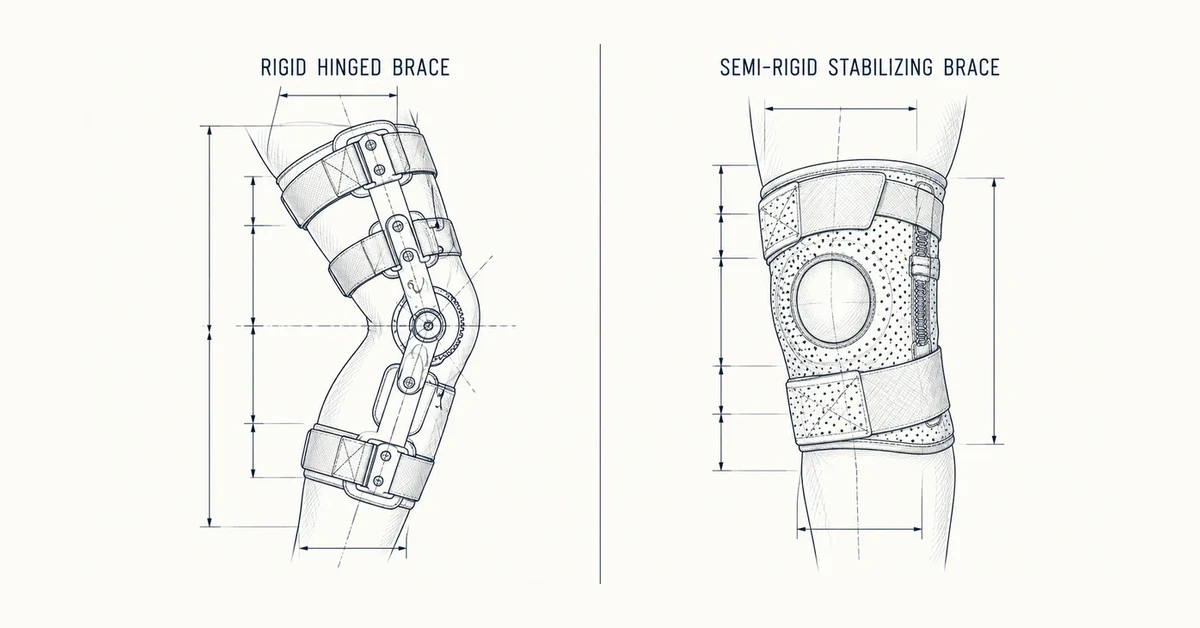
Brace design changes how the knee behaves. Research suggests:
- rigid braces can restrict motion too much and may make it harder to fully straighten the knee
- they can also create unnatural loading patterns in the joint
- soft and semi-rigid braces offer a more balanced mix of stability and smooth movement
For these reasons, soft or semi-rigid designs are often preferred for training, the later stages of returning to sport and all-day wear.
The Mrjoint Knee Brace belongs in this category. It is an open-patella stabilizing brace rather than a hinged post-surgery brace. Its patented Four-Strap Cross-Torsion System uses four independently adjustable straps that create four anchor points around the knee for wrap-around support and side-to-side stability. Four spiral spring stabilizers, two on each side, flex with the knee. They store energy as you bend and release it to help as you straighten. It is designed for movement-focused support, not post-surgical immobilization. In the first weeks after surgery, follow your surgeon's brace instructions.
Do ACL Braces Work? An Honest Look at the Evidence
Knee braces are widely used after ACL injuries, but how well do they work? Clinical research shows mixed results. Some people report clear benefits in comfort, mobility and how stable the knee feels, especially early in recovery. Others notice less difference, depending on their age, activity level and the type of brace.
Functional braces are still widely used after ACL reconstruction, but reviews of the clinical evidence, including a 2025 meta-analysis and a 2021 systematic review, have not found a consistent long-term benefit for routine use. Short-term gains in comfort, movement and confidence are more consistently reported. Prophylactic bracing is generally not recommended for everyone, only for people in high-risk sports.
The research also has limits. Bracing shows clear biomechanical effects in the lab, but real-world results are harder to measure because studies differ in:
- the brace designs tested
- the tasks measured, such as walking, cutting or jumping
- the age and activity level of participants
Because of this variation, experts cannot recommend one brace type for everyone. The benefits appear strongest in high-risk sports, in younger athletes and in the early return-to-play phase. More long-term, sport-specific research is still needed.
The Confidence Factor: Trusting Your Knee Again
A knee brace supports the mind as well as the joint. Many athletes and active people feel more confident as soon as they put one on, and that matters a great deal during recovery.
Wearing a brace can ease the fear that the knee will give way during sport or everyday movement. When you trust your knee again, you are more likely to stay active and stick with your rehab plan.
Braces may also support proprioception, your body's sense of where the knee is as you move. Better awareness can help with reaction time, posture and safer movement during jumps and quick turns.
This boost in confidence is often most noticeable in younger athletes and people coming back from ACL reconstruction. Feeling in control again helps them return to full activity.
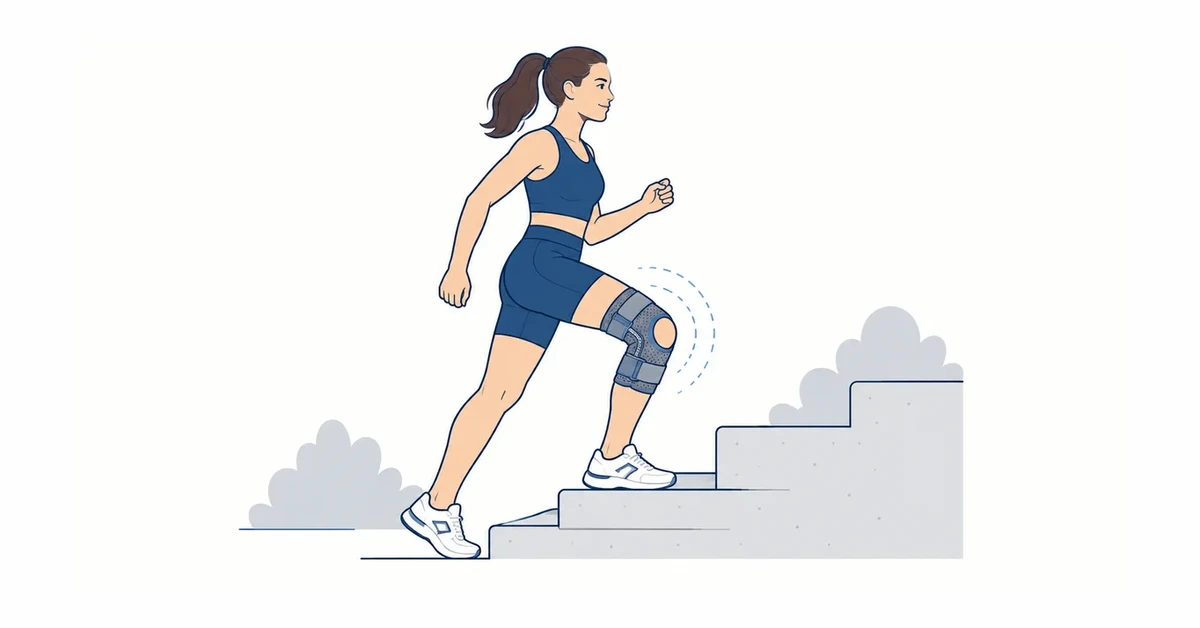
The Mrjoint Knee Brace is designed to stay in place while you move. Double-layer wave-pattern silicone strips on both wide straps help the brace grip, so you spend less time readjusting it. A thickened EVA patella ring pad surrounds the kneecap to cushion it and help hold it in position.
Why ACL Braces End Up in the Drawer
Even a well-designed knee brace only helps if you actually wear it. Many people stop early, usually because it is uncomfortable or inconvenient. Daily wear often drops sharply after the first few weeks.
The most common complaints are:
- too bulky to wear under clothes
- too hot in warm weather or during exercise
- skin irritation or soreness at pressure points
Rigid braces tend to cause more of these problems than soft ones. They can restrict movement, shift out of place or fit poorly, and people give up on them sooner.
Understanding why a brace matters makes people more likely to keep wearing it. So does choosing one that is comfortable. The Mrjoint Knee Brace uses honeycomb ventilation holes for airflow, a moisture-wicking inner lining to draw sweat away from the skin and an open Comfort Gap at the back to relieve pressure behind the knee.
How to Wear a Knee Brace for an ACL Injury
A brace can only do its job if it sits in the right place at the right tension. These steps apply to most strap-on soft and semi-rigid braces. If your surgeon or physical therapist has given you specific instructions, follow those first.
Getting the Fit Right
- Check the size before anything else. Most braces are sized by thigh or knee circumference. Measure with a soft tape at the point the brand specifies. The Mrjoint Knee Brace, for example, fits an upper thigh circumference of 14 to 20 inches, measured 3 inches above the knee.
- Center the kneecap. On an open-patella brace, the kneecap should sit in the middle of the front opening, not pushed to one side.
- Follow the fastening order in the instructions. Many strap-on braces are anchored below the knee first, then tightened above it, so the brace does not twist as you close it.
- Aim for snug, not tight. You should be able to slide one finger under each strap.
- Bend and straighten the knee a few times. Then walk a few steps and readjust any strap that has loosened or digs in.
Signs Your Brace Doesn't Fit
- it slides down within the first few minutes of walking
- you feel tingling, numbness or coldness below the brace
- the skin shows deep marks or redness that do not fade soon after you take it off
- the kneecap sits outside the opening or the side supports are not level with the joint
- the edges pinch behind the knee when you bend
If you notice numbness, increased swelling or pain, take the brace off and check with your healthcare professional.
What an ACL Brace Costs
Knee brace prices depend on the design, features and fit:
- Off-the-shelf braces: roughly $50 to $300. These suit general support, mild injuries and later-stage recovery. Most have adjustable straps, and some have hinges.
- Custom braces: usually $1,000 or more. They are made to your leg measurements for a closer fit and are mostly used by high-level athletes or people with an unusual knee shape.
Custom braces cost more up front. For people who need strong, long-term protection, a clinician may consider one worth it. Your insurer or clinician can tell you whether a custom brace is covered.
Lighter, Smarter Braces: Where Bracing Is Heading
Brace design is changing quickly. Recent developments include:
- lighter semi-rigid designs that are more comfortable to wear for long periods
- sensor technology that tracks knee movement and gives real-time feedback
- better materials that fit more closely when the leg is bearing weight
Research is catching up too. Because studies use different braces, testing methods and patient groups, results are still hard to compare. Future work is focusing on using smart technology to improve body awareness, making braces lighter without losing support, and testing them in real sports settings rather than only in the lab. There is also growing interest in designs tailored to specific injuries and body types.
Choosing Your ACL Brace: Final Takeaways
Recovering from an ACL injury takes time, effort and the right support. Whether you are coming back from surgery or trying to avoid further strain, the right knee brace can make a real difference to how you move and feel. It is not only about protection. Confidence, comfort and control matter at every stage.
Match the brace to your stage. Use a hinged rehabilitative brace when your surgeon prescribes one. Move to a functional or semi-rigid brace as you return to activity. Choose something comfortable enough that you will actually keep wearing it, and take the time to fit it properly.
If you want a brace for the active stages of recovery and everyday movement, the Mrjoint Knee Brace combines the Four-Strap Cross-Torsion System with four spiral spring stabilizers. It fits either knee and comes with a 60-day return policy.
Frequently Asked Questions
What does the anterior cruciate ligament (ACL) do?
The ACL runs from the thigh bone (femur) to the shin bone (tibia). It stops the shin bone from sliding too far forward and helps control twisting, which keeps the knee stable when you change direction or land.
Do I need a knee brace after ACL surgery?
Many surgeons prescribe a hinged brace for the first weeks after ACL reconstruction, while others do not. It depends on the procedure and your surgeon's protocol. Follow your surgeon's instructions on whether to wear one and for how long.
Can you wear a knee brace all day?
Many people wear a soft or semi-rigid brace for several hours at a time during activity, work or long walks. Take it off regularly to let your skin breathe, and check for redness, numbness or swelling. Ask your clinician how long you should wear it for your situation.
Should a knee brace feel tight?
A knee brace should feel snug and secure, not painful. You should be able to slide a finger under each strap. Tingling, numbness, cold toes or swelling below the brace mean it is too tight.
Can a knee brace prevent an ACL injury?
The research is mixed. Braces have not been shown to reliably prevent ACL injuries, but many athletes in high-risk sports wear one because it helps them feel more secure.
Not a medical device. Consult a healthcare professional about your condition.